Jayesh Sarawagi | November 2, 2026
Great healthcare begins with people—but healthcare teams often spend too much of their day managing interruptions.
Phone calls, appointment requests, reminders, patient questions, paperwork, prescription refill requests, follow-ups, payments, reviews, and administrative tasks can quickly become overwhelming. When these responsibilities are handled manually or across disconnected systems, staff members spend valuable time managing workflows instead of focusing on patients.
The result is often the same: more interruptions, longer response times, missed communication, administrative stress, and less time for meaningful patient interactions.
This is where patient engagement technology can make a difference.
Finerr is an all-in-one patient engagement platform built for independent healthcare providers. It helps automate repetitive tasks, improve patient communication and engagement, and strengthen a practice's digital presence from one place. The goal is simple: help healthcare teams spend less time managing operational noise and more time caring for patients.
Less chaos. More care.
By connecting communication, scheduling, reminders, digital forms, payments, reviews, phone systems, email marketing, mobile engagement, and website services, Finerr helps practices create a smoother experience for both their teams and their patients.

Healthcare teams are expected to deliver excellent patient experiences while managing an increasing number of administrative responsibilities.
1. Too Many Repetitive Phone Calls
Patients frequently call to ask about appointments, confirmations, prescription refills, office information, payments, or basic questions.
When staff must manually handle every request, phone volume can quickly become a major source of interruption.
Even a simple question can require a staff member to stop what they are doing, answer the call, find information, document the interaction, and move back to their previous task.
2. Appointment Management Takes Time
Scheduling should be simple, but many practices still depend heavily on phone-based appointment booking.
Patients may call during busy periods, wait on hold, leave voicemails, or call back multiple times.
Staff members then have to coordinate schedules manually while also managing patients who are physically in the office.
3. Missed Appointments Create Additional Work
Patients forget appointments.
Without consistent communication, practices may experience avoidable no-shows and last-minute cancellations.
Staff then spend additional time making reminder calls, attempting to fill open appointment slots, and following up with patients.
Automated appointment reminders can help reduce this administrative burden.
4. Patient Communication Is Often Disconnected
A practice may use one system for scheduling, another for texting, another for phone calls, another for reviews, and another for forms.
This creates a fragmented communication experience.
Instead of having one connected patient engagement workflow, staff members may have to move between multiple tools throughout the day.
5. Paperwork Slows Down the Patient Experience
Traditional forms can create unnecessary administrative work.
Patients may need to complete paperwork in the waiting room, while staff members manually review, organize, and process information.
Digital forms can help move this process online and make patient intake more convenient.
6. Staff Have Limited Time for Patient Engagement
Healthcare teams want to communicate with patients, educate them, follow up, and build stronger relationships.
But when employees are constantly handling repetitive operational tasks, proactive patient engagement can become difficult.
This creates a cycle where staff spend more time reacting and less time engaging.
Read more: The Hidden Cost of Operational Chaos in Healthcare Read more: Juggling Too Many Tools? Manage Everything From One Dashboard Read more: Why Operational Efficiency Is a Competitive Advantage in US Healthcare Read more: How Better Systems Reduce Team Burnout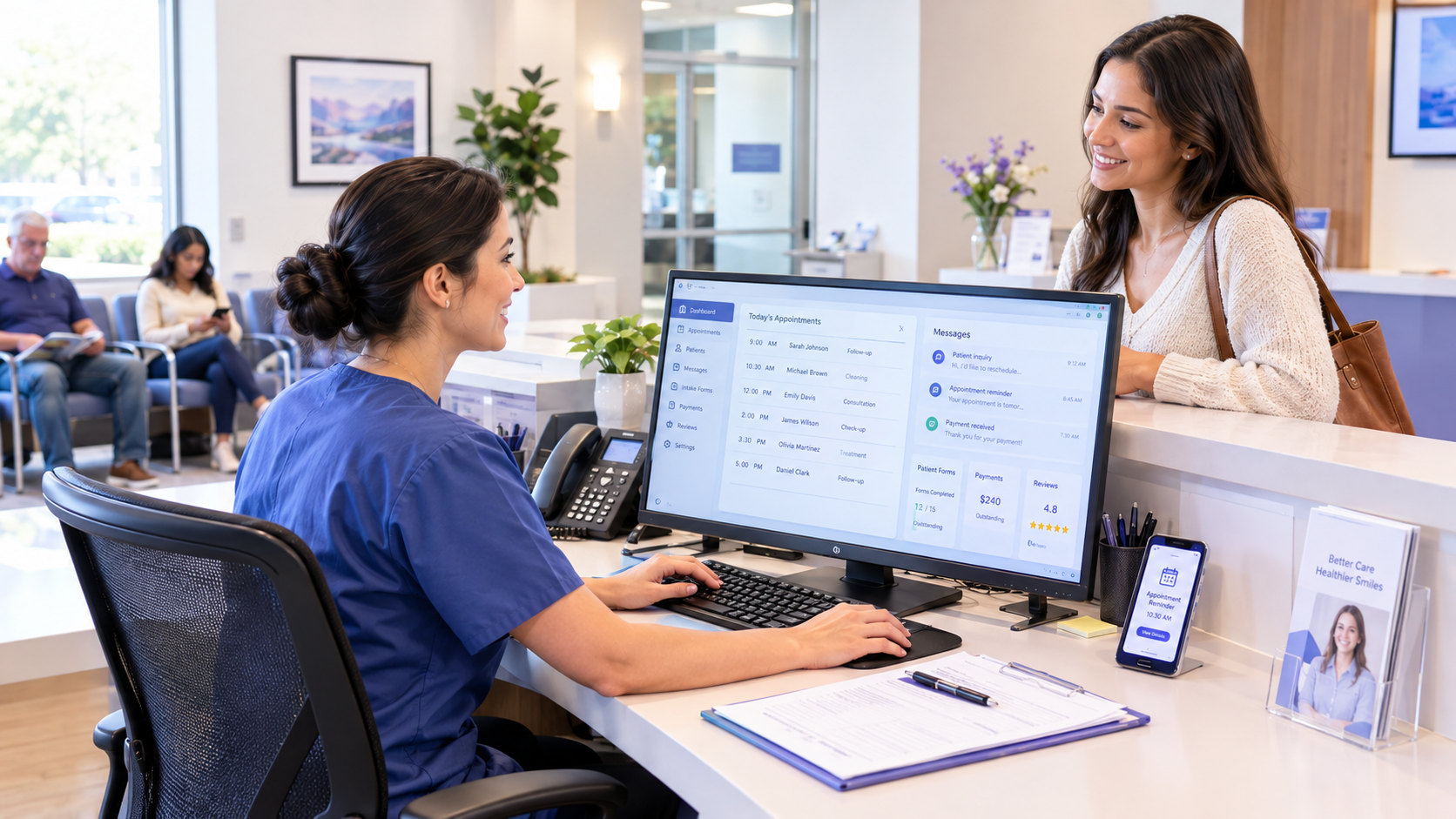
Finerr brings multiple patient engagement and communication tools together in one platform.
Instead of managing disconnected workflows, healthcare providers can use Finerr to support different stages of the patient journey.
1. Automated Patient Reminders
Finerr helps healthcare practices automate patient reminders through channels such as SMS, email, and voice communication.
Reminders can support:
Automation reduces the need for staff to manually contact every patient.
2. Two-Way Patient Text Messaging
Patients increasingly expect convenient communication.
Finerr's two-way texting capabilities help practices communicate with patients without relying entirely on phone calls.
Teams can use patient text messaging for:
Two-way communication can help reduce unnecessary calls while giving patients a familiar way to interact with the practice.
3. Online Scheduling
An online scheduling system allows patients to book appointments without calling the office.
This can be especially valuable outside regular business hours.
Instead of waiting for a staff member to answer the phone, patients can access scheduling options and choose an available appointment.
For practices, this can reduce scheduling-related phone traffic and make appointment management more efficient.
4. Digital Forms
Finerr supports secure digital patient forms that help practices reduce paperwork and simplify intake.
Patients can complete forms electronically instead of relying entirely on paper processes.
Digital forms can help improve:
The result is a smoother workflow for both patients and staff.
5. Healthcare Email Marketing
Email remains an important patient communication channel.
Finerr helps healthcare organizations create patient engagement email campaigns for:
Consistent communication helps practices remain connected with patients beyond individual appointments.
6. Reviews & Listing Management
Patient experiences influence online reputation.
Finerr helps practices manage reviews and online listings while encouraging satisfied patients to share their experiences.
Automated review requests can reduce the burden on employees while helping healthcare organizations strengthen their online presence.
Accurate business listings also make it easier for patients to find the right information about a practice.
7. Cloud Phone System & IVR
Phone communication remains essential in healthcare.
Finerr's IVR and cloud phone system helps practices manage calls through features such as:
A smarter phone system can help reduce missed calls and ensure patients reach the appropriate destination.
8. Online Patient Payments
Finerr also supports online patient payment experiences.
Giving patients convenient payment options can reduce friction around billing and make it easier for practices to manage payment-related communication.
A more convenient payment experience can contribute to a smoother overall patient journey.
9. Healthcare Mobile Application
A healthcare mobile application gives patients another convenient way to stay connected.
Depending on the workflow, patients can use mobile engagement capabilities for:
A mobile patient engagement app can extend the relationship between healthcare organizations and their patients beyond the physical office.
10. Healthcare Website & Digital Marketing
Patient engagement does not begin when someone walks through the front door.
It often begins with an online search.
Finerr also supports healthcare website development and digital marketing, including custom healthcare websites, SEO, social media management, Google Business Profile optimization, and other online presence services.
A stronger digital presence helps patients discover practices, understand their services, and take the next step.
The value of Finerr is not simply having multiple features.
The bigger opportunity is connecting everyday patient engagement activities into a more efficient workflow.
Reduce Unnecessary Calls
Online scheduling, automated reminders, two-way texting, and digital communication can reduce the number of routine calls staff need to handle manually.
This gives employees more time to focus on patients who genuinely need personal assistance.
Automate Repetitive Tasks
Healthcare employees should not have to repeatedly perform the same communication tasks throughout the day.
Automating reminders, follow-ups, review requests, and other recurring activities allows teams to spend less time on repetitive processes.
Make Communication More Convenient
Patients want convenient ways to interact with healthcare providers.
Some prefer texting. Others may prefer online scheduling, email, phone calls, or mobile communication.
Finerr provides multiple engagement channels that can help practices communicate with patients more efficiently.
Connect the Patient Journey
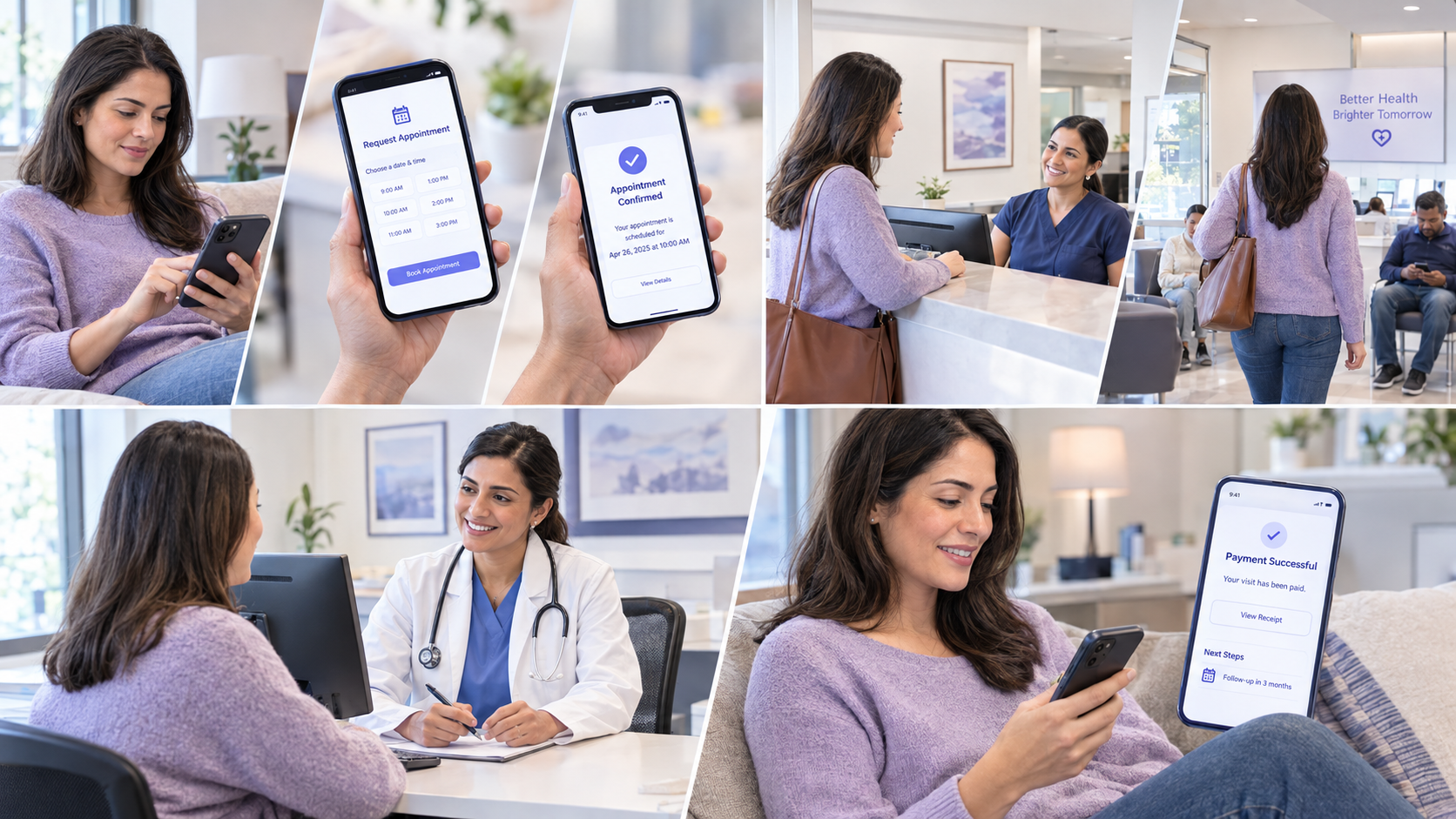
A patient may discover a practice through its website, schedule an appointment online, receive a reminder, complete digital forms, communicate by text, attend the appointment, make a payment, and later leave a review.
These interactions should feel connected rather than fragmented.
Finerr helps bring these patient engagement activities into a broader workflow.
Consider a typical healthcare practice.
A patient calls to schedule an appointment.
Another patient needs a prescription refill.
Someone else is asking whether their appointment is confirmed.
A fourth patient has not completed their forms.
Another patient has an outstanding payment.
At the same time, staff are answering calls, helping patients at the front desk, and managing daily administrative responsibilities.
None of these tasks are individually complicated.
The problem is the accumulation.
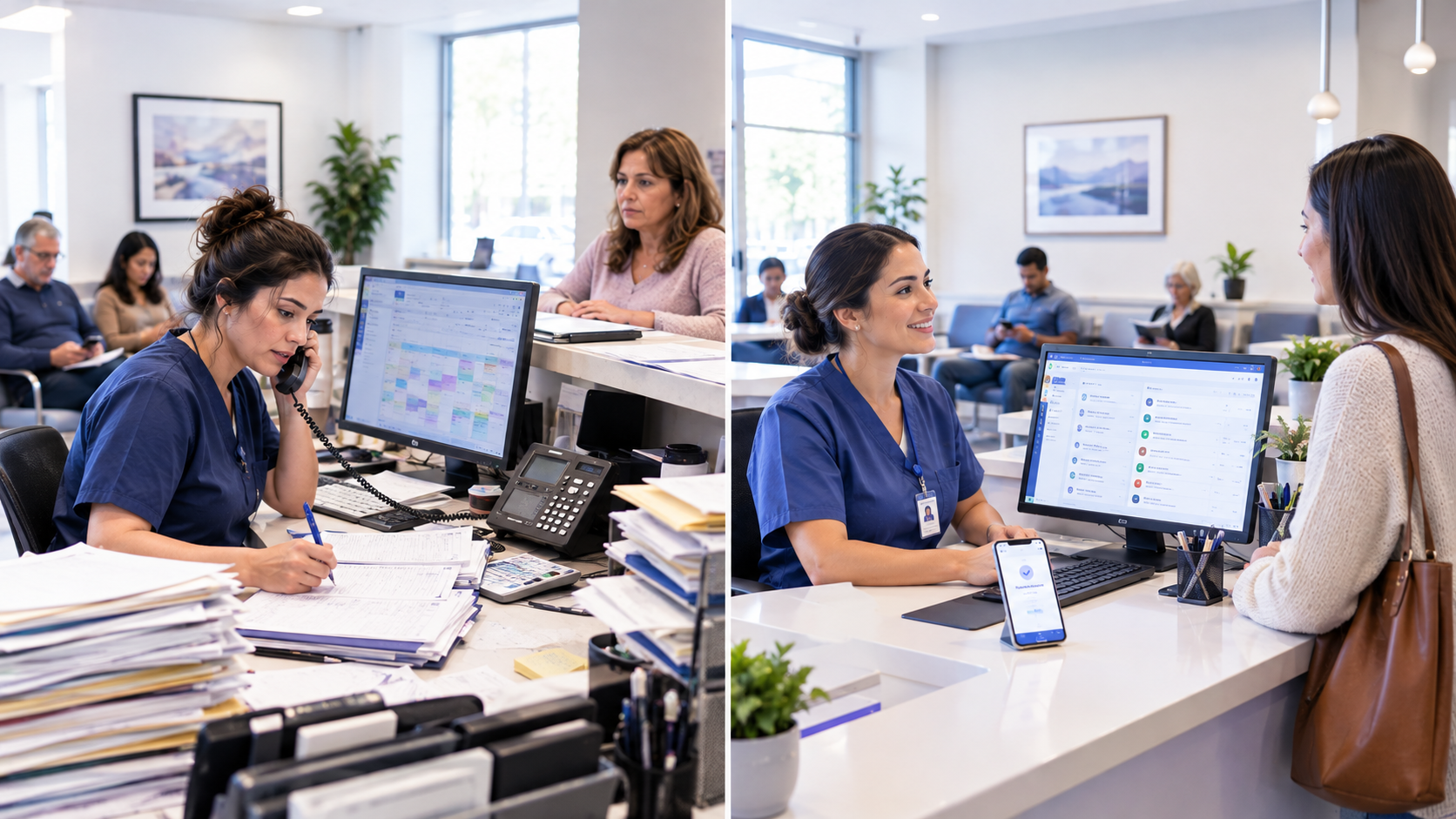
One interruption becomes ten. Ten become dozens. Eventually, the healthcare team spends much of the day reacting to requests.
Finerr helps move appropriate tasks into automated or self-service workflows.
Patients can receive reminders automatically.
Patients can schedule online.
Patients can communicate through two-way texting.
Patients can complete digital forms.
Patients can access payment options.
Patients can request services through digital channels.
Staff can then focus more attention on patients who require human interaction.
That is the meaning behind Less Chaos. More Care.
Independent pharmacies are a strong example of where patient engagement technology can reduce operational pressure.
Pharmacy teams manage prescription questions, refill requests, phone calls, vaccinations, patient communication, payments, reviews, and many other responsibilities throughout the day.
Finerr can help pharmacies centralize several of these patient engagement activities.
For example, automated reminders can support patient communication, online scheduling can make appointments easier to book, two-way texting can reduce unnecessary phone calls, and a cloud phone system can help manage inbound communication.
Digital forms and online payments can further simplify administrative workflows.
Reviews and listing management can help pharmacies strengthen their online reputation and visibility.
Together, these capabilities create a more connected patient experience without requiring staff to manually manage every interaction.
Finerr's pharmacy case studies demonstrate how independent pharmacies can use technology to improve patient engagement and operational workflows.
Explore:
Explore: Ocean Pharmacy Explore: TopValue Pharmacy Explore: Westside Pharmacy Explore: Zarchy Pharmacy Explore: Carteret PharmacyTechnology alone does not eliminate operational complexity. Practices should also rethink how everyday workflows are designed.
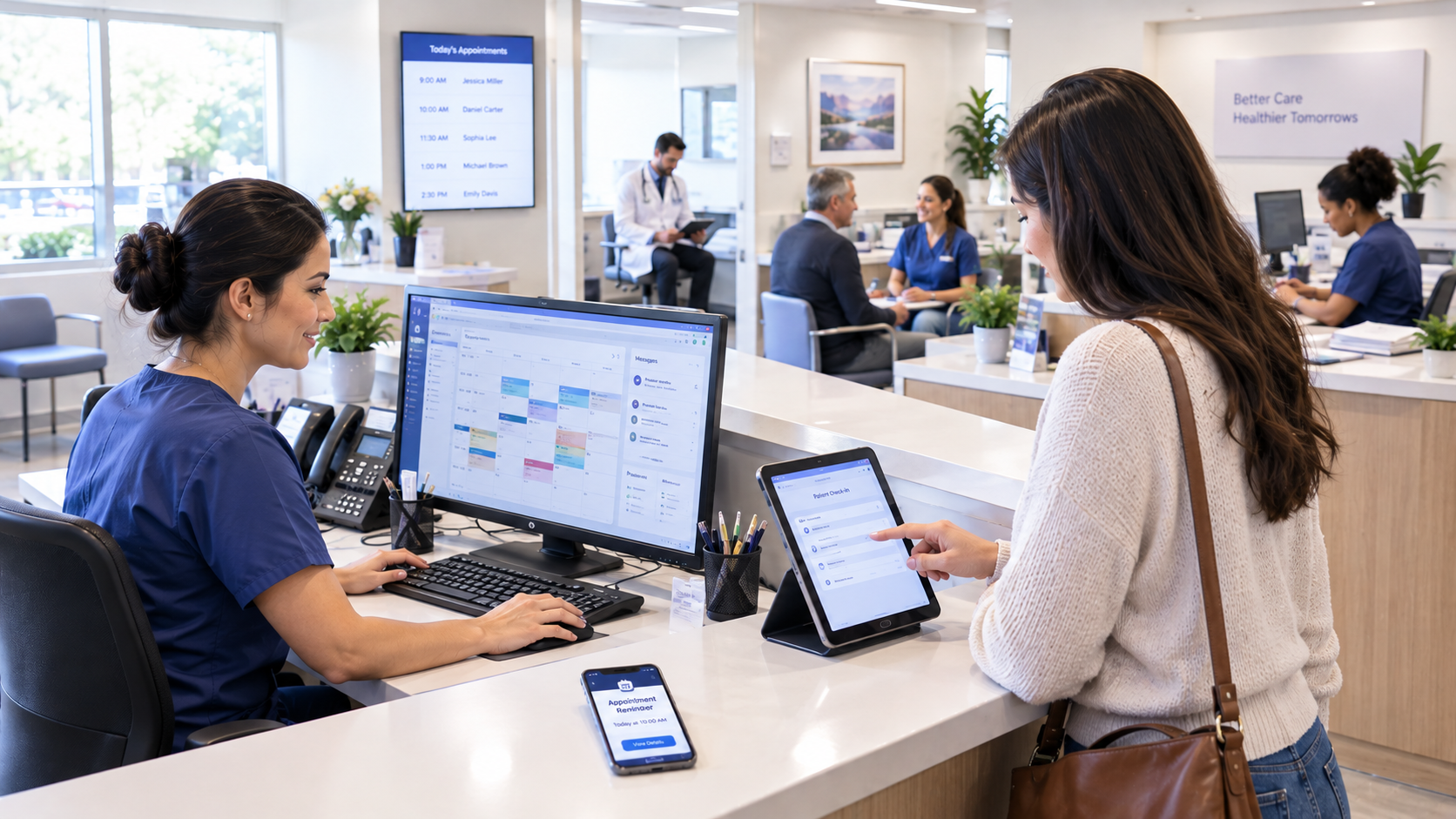
1. Automate Repetitive Communication
Identify tasks that staff perform repeatedly and determine which can be automated.
Appointment reminders, follow-ups, review requests, and routine notifications are strong starting points.
2. Give Patients Self-Service Options
Patients should not always have to call the office for simple tasks.
Online scheduling, digital forms, online payments, mobile communication, and digital refill requests can give patients more control.
3. Centralize Communication
Using too many disconnected systems can create additional work.
A centralized patient engagement platform can help teams manage communication more efficiently.
4. Keep Human Interaction Where It Matters Most
Automation should not remove the human element from healthcare.
It should protect it.
When technology handles repetitive tasks, employees have more time for conversations that require empathy, judgment, and personal attention.
5. Measure What Changes
Healthcare organizations should monitor indicators such as:
These insights can help practices identify where additional automation can create value.
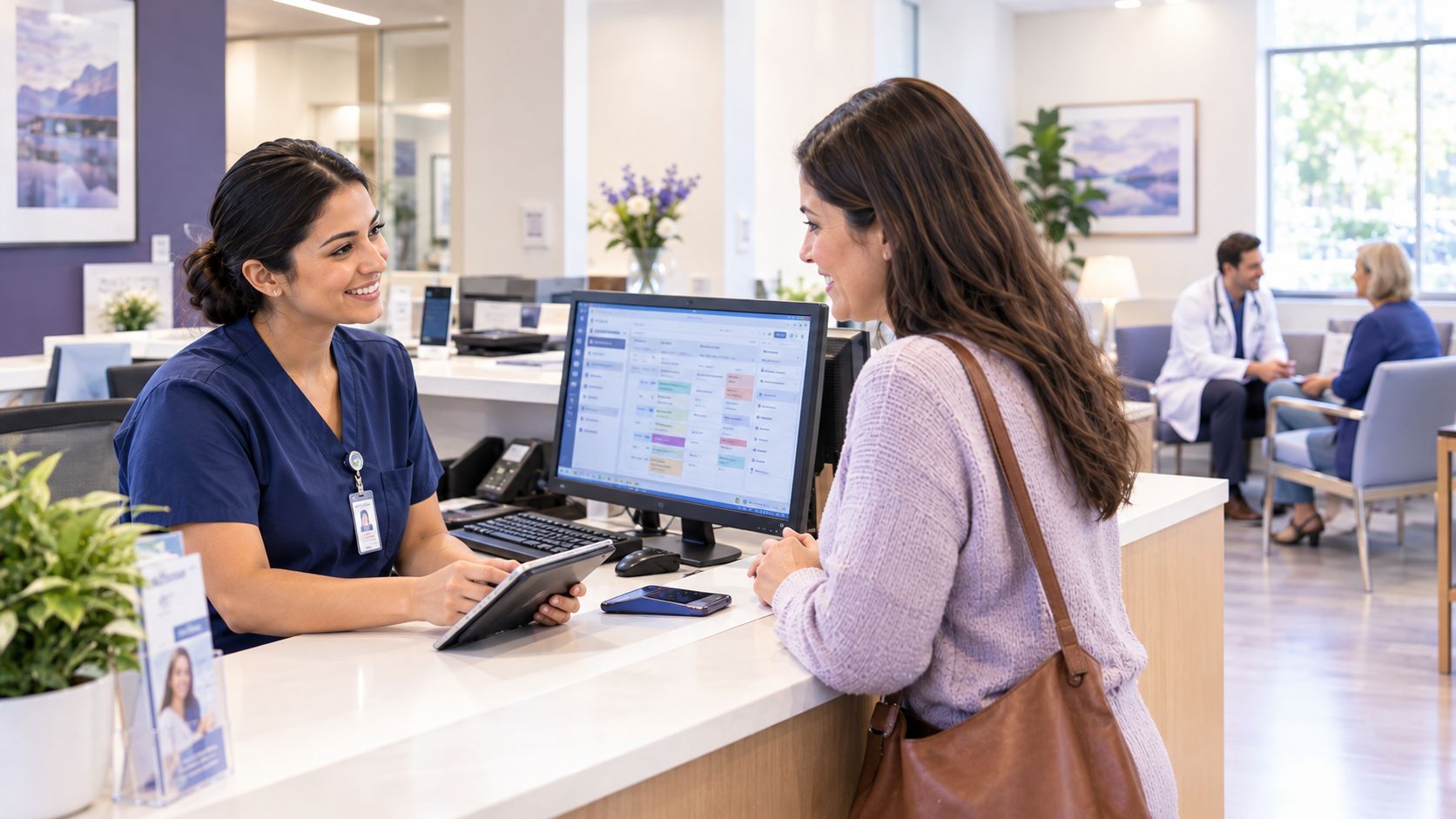
Healthcare teams should not have to choose between operational efficiency and meaningful patient relationships.
The right technology can help create both.
Finerr's all-in-one patient engagement platform brings together communication, scheduling, automated reminders, two-way texting, digital forms, email marketing, reviews and listing management, online payments, cloud phone systems, mobile engagement, and healthcare website services.
The objective is not simply to add more technology.
It is to remove unnecessary complexity.
When routine tasks are automated, patients have more convenient ways to communicate, and teams have fewer interruptions, healthcare organizations can create calmer and more efficient experiences.
Because every minute saved from repetitive administrative work is another moment that can be invested in people.
Less chaos. More care. Better patient experiences.
Book a personalized demo and see how Finerr helps your team work smarter with less chaos.


Healthcare teams spend too much time managing repetitive calls, appointment requests, reminders, paperwork, payments, reviews, and patient communication. These interruptions can increase staff workload and reduce the time available for meaningful patient care. Finerr is an all-in-one patient engagement platform designed to simplify these workflows. With automated patient reminders, two-way texting, online scheduling, digital forms, email marketing, reviews and listing management, online payments, cloud phone systems, mobile engagement, and healthcare website services, Finerr helps providers automate repetitive tasks and create more convenient patient experiences. By reducing operational complexity, Finerr helps healthcare teams spend less time managing interruptions and more time caring for patients.
Get in Touch


Finerr is an all-in-one patient engagement platform built for independent healthcare providers.
It helps automate repetitive tasks, improve patient communication, and simplify daily workflows.
The platform brings multiple engagement tools together to help teams spend more time caring for patients.
Finerr automates repetitive activities such as patient reminders, appointment communication, follow-ups, and review requests.
It also provides tools for scheduling, digital forms, payments, texting, and phone communication.
This can reduce the amount of manual work handled by healthcare staff.
Finerr provides automated patient reminders, two-way texting, online scheduling, digital forms, email marketing, reviews and listing management, online payments, and mobile engagement.
It also offers an IVR and cloud phone system, healthcare websites, SEO, and digital marketing services.
These tools support different stages of the patient journey.
Yes. Finerr provides self-service and digital communication options that can reduce routine phone traffic.
Patients can use online scheduling, two-way texting, digital forms, and other communication channels.
This allows staff to focus phone time on patients who need personal assistance.
Automated patient reminders help practices communicate consistently without requiring staff to contact every patient manually.
Reminders can support appointments, follow-ups, notifications, and other patient communication workflows.
This can help reduce repetitive administrative work and improve engagement.
Yes. Finerr provides an online scheduling platform that allows patients to book appointments without calling the practice.
This gives patients a convenient self-service option and can reduce scheduling-related phone calls.
It can also help practices manage appointment workflows more efficiently.
Two-way texting allows healthcare teams and patients to communicate through a convenient messaging channel.
Practices can use it for appointment communication, questions, confirmations, follow-ups, and other patient interactions.
This can help reduce reliance on phone calls for routine communication.
Yes. Finerr includes an IVR and cloud phone system designed to support healthcare communication workflows.
Features include IVR, call routing, voicemail, business texting, and missed-call handling.
This helps practices organize inbound communication and reduce communication-related interruptions.
Digital forms allow patients to complete information electronically rather than relying entirely on paper processes.
They can support patient intake, registration, consent, signatures, and other administrative workflows.
This can reduce paperwork and make the patient intake experience more efficient.
Yes. Finerr supports healthcare email marketing and patient engagement email campaigns.
Practices can use email communication for newsletters, educational information, reminders, follow-ups, and patient retention campaigns.
Consistent communication can help practices maintain stronger patient relationships.
Yes. Finerr includes Reviews & Listing Management to help healthcare organizations manage their online reputation.
Practices can automate review requests and monitor their online presence across relevant platforms.
This can help strengthen patient trust and their digital presence.
Yes. Finerr provides an online patient payment solution designed to make payment communication more convenient.
Digital payment options can reduce friction for patients and simplify payment-related workflows.
This is another way practices can create a smoother overall patient experience.
Yes. Finerr provides healthcare mobile engagement capabilities for practices and their patients.
Depending on the workflow, patients can use mobile functionality for appointment booking, refill requests, updates, and secure communication.
A mobile experience can help practices stay connected with patients beyond the office.
Yes. Finerr is particularly relevant to independent pharmacies that need to manage high volumes of patient communication.
Its scheduling, reminders, texting, phone, review, payment, mobile, and digital engagement tools can support pharmacy workflows.
The goal is to help pharmacy teams reduce repetitive work while improving patient engagement.
Yes. Finerr's patient engagement solutions are designed for multiple healthcare environments.
The platform supports use cases across clinics, dental offices, medical spas, physical therapy practices, and veterinary practices.
Specific workflows can be supported through scheduling, communication, reminders, forms, phone systems, and other tools.
Finerr gives patients more convenient ways to communicate and interact with their healthcare provider.
Online scheduling, texting, reminders, digital forms, payments, mobile engagement, and other tools reduce unnecessary friction.
At the same time, automation gives staff more time to focus on meaningful patient interactions.
Disconnected systems can force employees to switch between different tools for scheduling, communication, phone calls, forms, reviews, and other tasks.
This creates additional administrative work and can make workflows more difficult to manage.
An integrated patient engagement approach can help simplify these processes.
Yes. Finerr is designed to automate and simplify repetitive patient engagement activities.
When routine scheduling, reminders, communication, and other tasks are handled through digital workflows, staff can spend less time responding to interruptions.
This creates more opportunity for direct patient care.
Finerr supports patient engagement across multiple communication channels and stages of the patient journey.
Patients can interact through texting, scheduling, reminders, email, mobile engagement, phone systems, forms, and other digital experiences.
This helps healthcare organizations maintain more consistent patient communication.
Managing many separate tools can create complexity, additional administrative work, and disconnected workflows.
An all-in-one patient engagement platform brings important communication and engagement functions together.
Finerr helps healthcare teams simplify workflows so they can spend less time managing interruptions and more time caring for patients.
Discover how Finerr streamlines daily operations, reduces administrative workload, and improves team efficiency so your staff can spend more time caring for patients.